
BOOK SIX · CHAPTER 1
The Building Has a Network
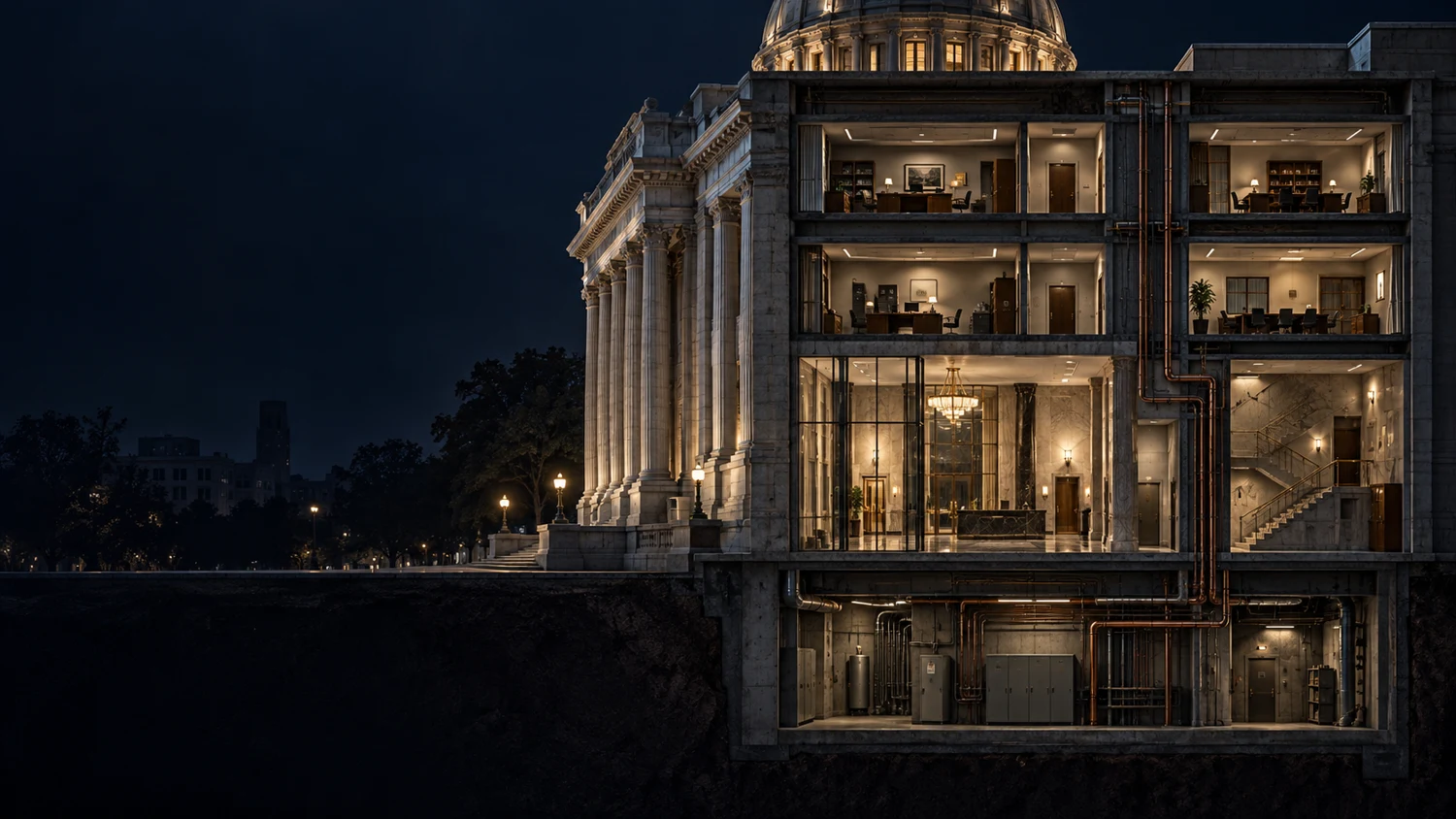
The security system runs on computers. The computers run on a network.
Take a walk through a government building at 5:30 in the morning. Nobody is there yet. The building is already busy.
A camera in the parking lot is sending video to a recorder in a closet. The vehicle gate is waiting for a code. At the loading dock, an intercom is ready to ring the security desk. Inside the lobby, a visitor kiosk sits ready to print the day's first temporary badge.
Connected doors may have readers linked through access-control panels to a server. The server keeps a log of who went where and when. Upstairs, a building controller is warming the offices and starting the air handlers. Somewhere, a vendor has a remote login so they can fix the system without driving in.
Count them up. The list gets long fast.
Twenty years ago, a secure building meant locks, guards and a few cameras on tape. Today it means computers you can walk past without noticing. Each one has software. Each one has a password. Each one has a connection to something else.
Now ask who owns them.
IT runs the network. Physical security runs the cameras and the doors. Facilities runs the heating and the air. A contractor installed half of it and still holds the keys. Procurement bought it all from different vendors over different years.
Everyone touches these devices. Nobody owns the risk of all of them together. That gap is where attackers like to work.