
BOOK SIX · CHAPTER 3
The Door System
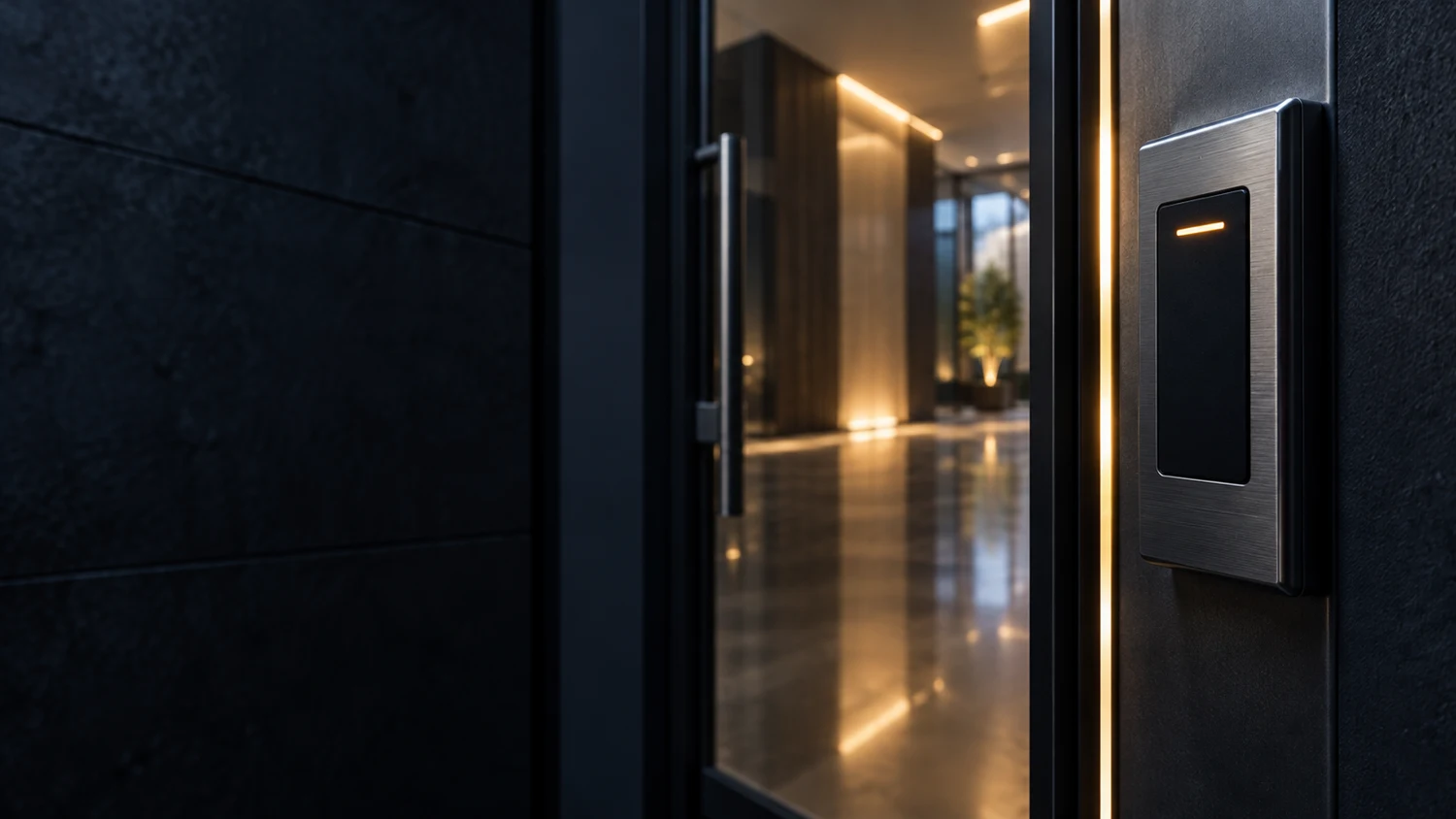
The system that lets the right people in must keep the wrong people out.
A badge reader has two jobs, and they pull in opposite directions.
It has to stop the wrong person. And it has to let the right person through, every time, at the right moment. The employee at 7:00 a.m. The contractor at the loading dock. The firefighter at 2:00 a.m.
Behind every reader sits a bigger system. A controller or server checks the badge, depending on the system. A database holds the names and the rules. A log records who opened which door and when. That system is software, and software has flaws.
INDEPENDENT EVIDENCE
In July 2024, CISA published two warnings about C-CURE 9000, a widely used access-control platform from Johnson Controls. One flaw could let an attacker reach administrator access through weak installer passwords. The other could let an attacker get at the passwords the system itself uses. CISA updated the second warning twice in 2025. In both cases, CISA said it had no reports of anyone exploiting the flaws.
So this is a warning. Nobody broke in. It still matters, because of what comes next.
Say your team reads an alert like this on a Tuesday afternoon. The fix sounds simple: update the software, change permissions, tighten the network. Now picture doing it in a hurry.
A permission change locks out the account the readers depend on. A network rule cuts the reader off from its server. The badges stop working at the side entrance, and nobody finds out until the morning shift is standing outside. Or the doors still open, but the log stops recording who came in.
The flaw is closed. The building is worse off.
That's why patching is only half the job. The other half is proof that the door still works for the people who belong there.